Tips to Stop Gambling: Practical Steps and Support in Australia
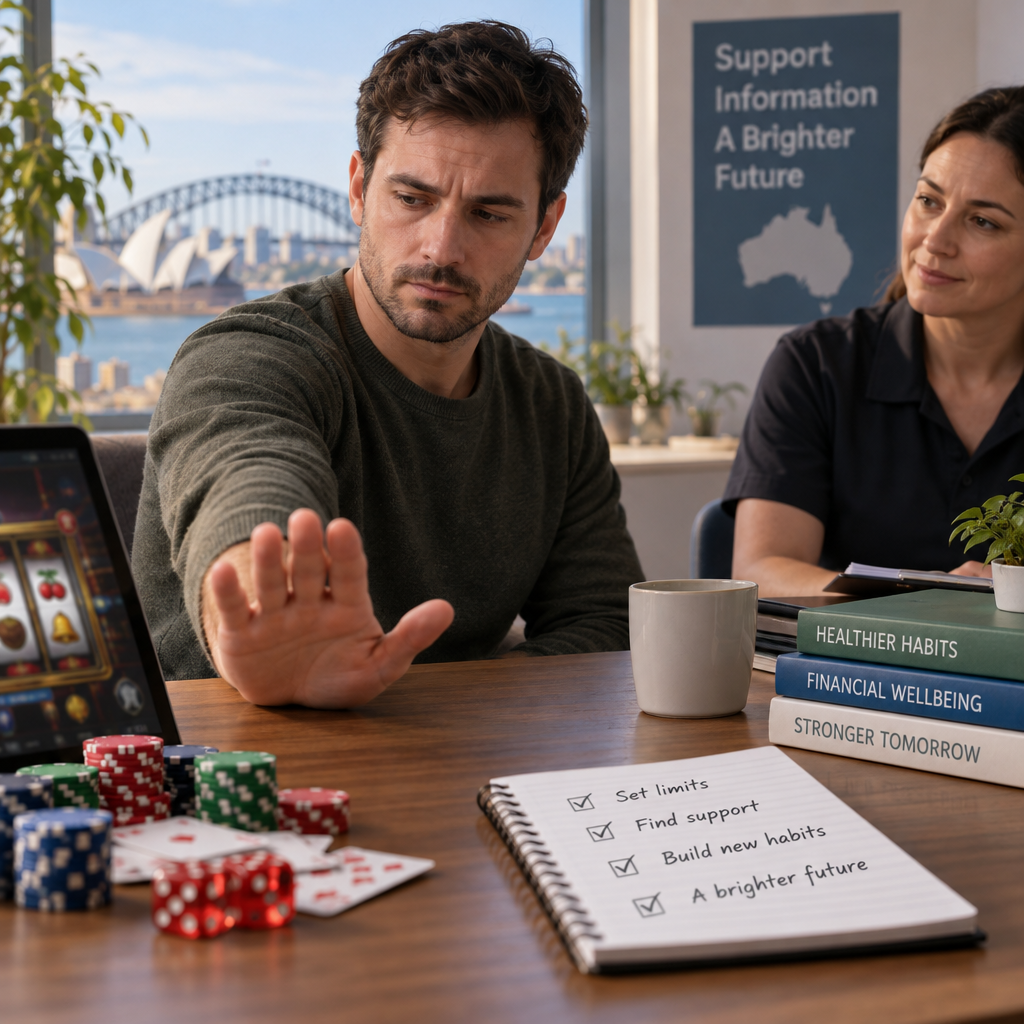
If you want to stop gambling, you do not have to work it out alone or use a particular label for what you are experiencing. These tips to stop gambling can help you take a manageable first step, make gambling harder to access and prepare for urges. Barriers and support work best as part of a plan you can adjust to your circumstances; no single measure can guarantee an outcome.
Take one practical step now
If you are gambling or feel close to starting, focus on what you can do in the next few minutes. You do not need to complete every step at once. Choose the one that is possible and safe for you.
The National Gambling Helpline can also help you find local services. Call 1800 858 858 for free, confidential support at any time, including if you are concerned about someone else’s gambling.
- Put down your phone, close the gambling website or leave the gambling environment.
- Remove a gambling app from your device. Remember that deleting an app does not close your account or prevent you from downloading it again.
- Check that money for your immediate needs is accessible and consider moving it away from an account you use for gambling.
- Message a trusted person, if it is safe to do so, or call the National Gambling Helpline.
Make gambling harder to access
Self-exclusion from gambling is a voluntary request to restrict your access to specified gambling services, venues, areas or products. It can give you a useful barrier between an urge and the opportunity to gamble.
Different forms of gambling may need different arrangements. BetStop covers Australian-licensed online and phone wagering; physical venues have separate local schemes. Bank and device controls can add another layer, but they do not replace an exclusion.
For example, someone who uses a licensed wagering app and also plays pokies at a hotel may need both BetStop and a venue exclusion. Check what each arrangement covers, because safeguards can have gaps and depend on their terms and enforcement.
Use BetStop for online and phone wagering
BetStop is Australia’s free national self-exclusion register for Australian-licensed online and phone wagering providers. You register yourself once rather than requesting an exclusion from each covered provider. You must ordinarily reside in Australia and have your identity verified.
Registration normally requires a mobile phone, access to email and a Medicare card, Australian passport or Australian state or territory driver licence. If you do not have those documents, call BetStop on 1800 238 786 to discuss other identity-verification options. You can nominate up to five consenting support people.
You can choose an exclusion lasting from three months to a lifetime. While you are registered, covered providers must not accept your bets, open wagering accounts for you or send you direct wagering marketing. Existing wagering accounts should be closed and credit refunded. Keep your contact details current, as outdated information can affect matching.
BetStop does not cover in-person gambling, unlicensed online services or every online gambling product. It also will not remove every gambling advertisement you encounter. Before a time-limited exclusion ends, consider whether you want to extend it.
Check venue exclusion options where you live
Venue arrangements differ across Australia. A gambling counsellor can help you work out which scheme applies, especially if you want to exclude yourself from several places or do not want to visit a venue to make the request.
Before agreeing to an exclusion, ask whether it applies to the whole venue, a particular area or a gambling activity. Also check when it starts, how long it lasts, whether it can be revoked and what happens if its conditions are breached.
- New South Wales: Ask a venue or GambleAware counsellor. An online multi-venue system covers gaming areas of some clubs and hotels; check casino and TAB arrangements separately.
- Victoria: Separate routes exist for hotels and clubs, Crown Melbourne and TAB. Gambler’s Help can explain the options.
- Queensland: Ask a venue or Gambling Help service. Remote assistance may allow you to nominate venues without visiting them.
- South Australia: The local term is barring. An online application can specify venues, products or gambling types.
- Western Australia: Crown Perth offers an online casino self-exclusion process. Check arrangements for other gambling products separately.
- Tasmania: A counsellor can help arrange an exclusion from venue gambling and explain its scope.
- Australian Capital Territory: The Gambling and Racing Commission provides information about exclusion from selected or all licensed gambling venues. Check current terms with the commission or a local counsellor.
- Northern Territory: Contact a venue licensee or participating counselling service. One application can nominate multiple venues.
Reduce prompts and device access
Gambling reminders can make it harder to follow through on a decision to stop. Changing your devices and everyday routines can reduce some of those prompts, although it will not remove all opportunities to gamble.
Consider blocking software for the devices you use. Check compatibility, coverage, cost and how the tool is managed before choosing one. A blocker may miss some sites, including newly created ones, so combine it with exclusions and other support rather than relying on it alone.
- Delete gambling apps and turn off related notifications.
- Unsubscribe from promotional messages where possible and review advertising preferences on social media.
- Remove saved shortcuts and payment details from gambling websites.
- Ask a counsellor to help you identify access routes or reminders you may have overlooked.
Protect essential money and address debt
Start by identifying the money you need for rent, food, utilities, medication, transport and other essentials. If possible, set it aside so that an urge to gamble does not put those immediate needs at risk.
Ask your bank whether it offers a gambling transaction block and which accounts or cards it covers. Check how it handles cash withdrawals, transfers, joint accounts and requests to remove a block. Controls differ: they may rely on how a merchant is classified, so a gambling transaction can be missed or an unrelated payment blocked.
If it feels safe and useful, agree on a specific, reversible safeguard with someone you trust. They could sit with you while you review bills or make a payment plan. You do not need to hand over passwords, cards or complete control of your finances.
If bills or debts feel unmanageable, contact the National Debt Helpline on 1800 007 007. It offers free, independent and confidential financial counselling and referrals. Its published phone hours are 9.30 am to 4.30 pm Monday to Friday; check its website for current hours and holiday arrangements.
Financial counselling is different from legal or investment advice. If legal action over a debt is underway, seek legal help promptly. Avoid borrowing or gambling to try to recover losses: doing so can put more money at risk.
Make a plan for gambling urges
An urge can be prompted by a situation, thought or feeling. Stress, debt worries, a sports broadcast, access to cash, social pressure or alcohol may be triggers for some people, but your own pattern may be different. Noticing that pattern can help you choose which barriers and activities to put in place.
Write a short plan somewhere you can find it when you need it. The aim is not to rely on willpower alone, but to create time and support between the urge and a decision to gamble.
- Pause and delay the decision to gamble, even if you can only manage a short pause at first.
- Change the situation: leave the venue, put down your phone or move away from the trigger.
- Contact someone safe or call the National Gambling Helpline. You can tell them you need help getting through the moment.
- Choose an accessible non-gambling activity, such as making a meal, listening to something or going for a walk if that suits you.
- When you feel ready, note what prompted the urge and whether another safeguard might help.
If you gamble again, review what happened
A lapse does not make the steps you have already taken worthless. If you gamble again, stop the session if you can and avoid chasing losses. Check that you can still meet essential expenses, then contact a trusted person, counsellor or helpline for support.
Look at how access occurred without blaming yourself. Was a venue missing from your exclusion, or did you use an account or device you had not considered? The answer can help you add or adjust a safeguard. If money is now tight, a financial counsellor can help you work through the next steps.
Urges and setbacks do not follow a fixed timetable. A strategy may need to be repeated or changed, and a gambling counsellor can help you adapt your plan.
Find gambling support in Australia
You can ask for help even if you are unsure whether your gambling is a problem. A counsellor can listen, discuss the ways gambling affects you and help you choose practical next steps. Support is also available to family and friends.
If involving someone close to you feels safe, you might say: “I’m trying to stop gambling. Could you sit with me while I call for support?” You can also contact a service directly without telling family or friends.
A GP can discuss your health and treatment options. Cognitive behavioural therapy may help some people, although costs, referral requirements and availability vary. Local services can also help you explore peer-support groups; check each group’s format, eligibility and any costs.
If family or domestic violence makes it unsafe to seek help from someone close to you, contact 1800RESPECT on 1800 737 732. If a life is in immediate danger, call 000.
- National Gambling Helpline: 1800 858 858. Free, confidential support is available 24/7, with help finding local services.
- Gambling Help Online: Free, confidential online support, counselling and self-help information are available through its website.
- National Debt Helpline: 1800 007 007. Contact the service for financial counselling and referrals during its published phone hours.
- Lifeline: 13 11 14. Confidential crisis support is available 24/7. If a life is in immediate danger, call 000.
FAQ
How can I stop gambling when I have an urge?
Pause the decision, put down your phone or leave the gambling environment, and contact a trusted person or the National Gambling Helpline. Choose a non-gambling activity that is practical for you. Later, consider what prompted the urge and whether an extra safeguard would help. Urges vary, so you may need to repeat or adapt your plan.
Can I block myself from gambling online and in venues?
Yes, but you may need more than one self-exclusion arrangement. BetStop covers Australian-licensed online and phone wagering, while venue exclusions are arranged separately and differ by state or territory. Device and bank blocks can add friction, but may miss sites or transactions.
What should I do if I gamble again after stopping?
Stop the session if possible and avoid trying to win back losses. Check your money for essentials, consider how you accessed gambling and reconnect with a counsellor or another safe support person. You can use what happened to adjust your plan; it does not erase your earlier efforts.
How can I help someone who wants to stop gambling?
Listen without judgement, ask what help they want and offer to sit with them while they contact a service. Protect your own finances and avoid taking over their decisions or accounts. A person must register themselves for BetStop, although some jurisdictions have separate processes concerning third-party exclusions. You can also call the National Gambling Helpline for support as an affected family member or friend.
Where can I get gambling help in Australia?
Call the National Gambling Helpline on 1800 858 858 at any time, or contact Gambling Help Online through its website. For financial pressure, the National Debt Helpline is on 1800 007 007 during its published phone hours. For crisis support, call Lifeline on 13 11 14; if a life is in immediate danger, call 000.
Can a bank gambling block stop every payment?
No. Bank controls vary by product and can depend on how a business is classified, so some gambling transactions may not be recognised. Ask your bank what its block covers, whether it applies to each relevant card or account, and how cash, transfers and removal requests are handled.
Choose one action you can take now: check an exclusion option, make a short plan for an urge or call the National Gambling Helpline. You can add safeguards and support over time. Progress does not have to follow a fixed path, and you do not have to manage it alone.