Support for Gambling Addiction in Australia: Where to Find Help
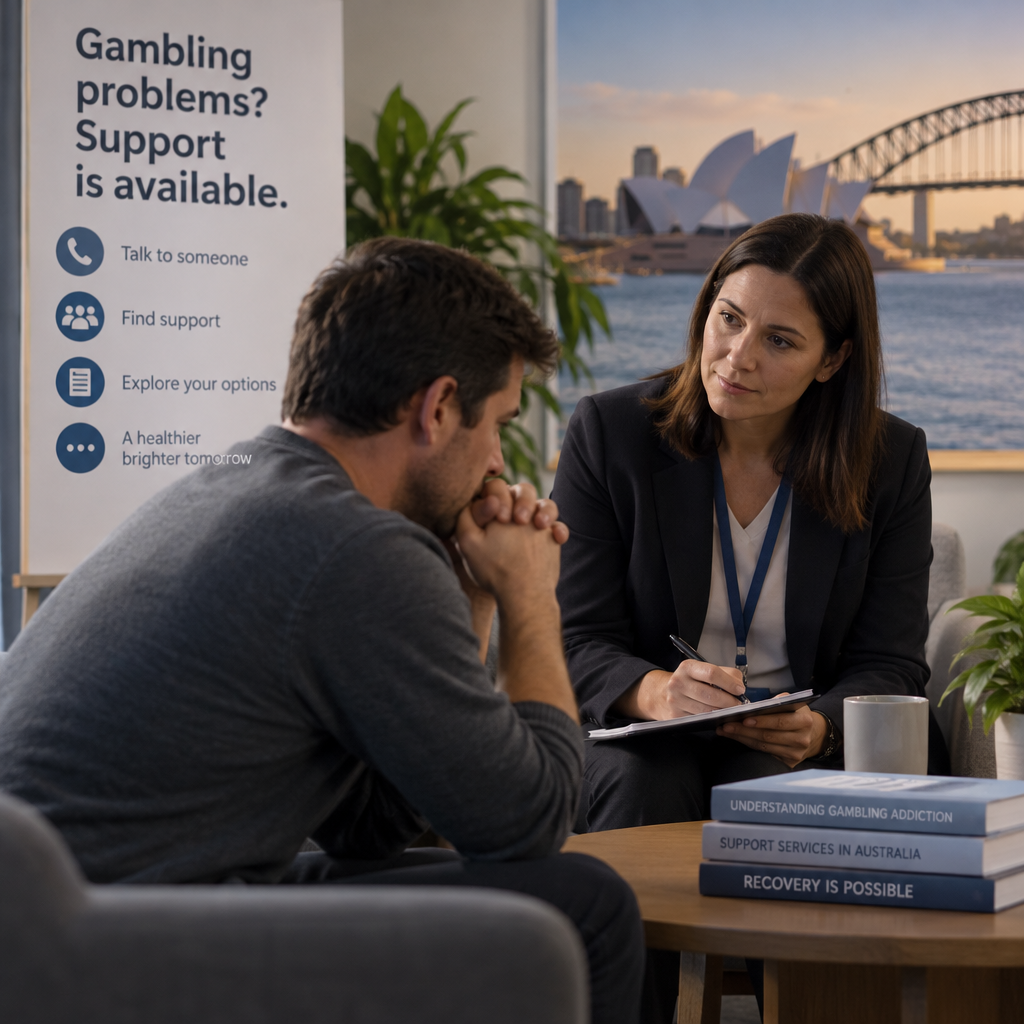
Finding support for gambling addiction can begin with a conversation, whether you are concerned about your own gambling or someone else’s. You do not need a diagnosis, severe debt or a decision to quit before asking for help. For free, confidential gambling support in Australia, call 1800 858 858 or use Gambling Help Online’s chat. A counsellor can help you consider your options, which may include counselling, financial assistance or ways to limit access to gambling.
Get help when the situation feels urgent
Different services can help with different urgent needs. Choose the option that fits your situation; gambling harm does not mean a person is necessarily experiencing a crisis or violence.
If someone may be monitoring your communications, consider using a safer device where possible. Calls or texts to 1800RESPECT may appear on a phone bill.
- Immediate danger or an urgent medical emergency: call 000.
- Mental health crisis or thoughts of suicide: call Lifeline on 13 11 14, available 24/7. You can also text 0477 13 11 14 or use Lifeline’s online chat.
- Gambling support when there is no immediate danger: call 1800 858 858 or use Gambling Help Online chat. Both are available 24/7.
- Domestic, family or sexual violence: call 1800RESPECT on 1800 737 732, available 24/7, or text 0458 737 732.
Recognising when gambling support may help
Gambling harm can affect money, relationships, work, health or everyday life. It may include spending more time or money than you intended, hiding gambling, relying on others for money or finding it difficult to stop thinking about the next bet.
Another sign is chasing losses: continuing to gamble in an attempt to recover money already lost. These experiences are reasons to talk with someone, not proof that you have a gambling disorder. Only a qualified professional can assess a clinical condition.
You can seek advice even if you have not experienced severe debt. For example, repeatedly spending more than you planned may be enough reason to explore what is happening. Support is available whether you want to cut back, consider stopping or simply understand your options.
Starting with the national helpline
Gambling support services are available to people affected by their own gambling and to partners, relatives and friends. The National Gambling Helpline on 1800 858 858 and Gambling Help Online’s professional counsellor chat are free, confidential and available around the clock.
You can describe as much of your situation as you feel comfortable sharing and ask about possible next steps. A counsellor can discuss your concerns, help you consider a plan and direct you towards further support, including services in your state or territory. Contacting the helpline does not require a GP referral or commit you to treatment.
Local services can have different appointment arrangements, privacy practices and availability. If you are referred elsewhere, ask what information will be shared and what the service offers before deciding whether to proceed.
Counselling and treatment options
Gambling counselling can provide space to explore when and why you gamble, the consequences you are experiencing and changes you would like to make. A counsellor might help you identify situations in which gambling feels more tempting and plan alternative responses.
A GP can also discuss your concerns and, where appropriate, refer you to a mental health professional. Cognitive behavioural therapy, or CBT, is one possible psychological treatment. It can involve examining thoughts and behaviour patterns associated with gambling and practising different ways to respond. It is an option rather than a guaranteed solution or the right approach for everyone.
Free specialist gambling counselling is separate from private psychological care, and you can contact Gambling Help Online directly. Eligible people may also be able to claim Medicare rebates for selected mental health services under a treatment plan. Services Australia describes up to 10 individual and 10 group sessions per calendar year, with an initial referral for up to six psychological sessions. Fees vary, and a rebate may not cover the full cost.
Before booking, ask about fees and rebates, waiting times, telehealth, experience with gambling harm and confidentiality. If you are looking for a psychologist, you can check their registration through Ahpra. Not every gambling counsellor is a psychologist, and registration rules differ between professional roles.
Peer, cultural and accessible support
Some people value talking with others who have experienced gambling harm. Gamblers Anonymous Australia is a peer-led, 12-step fellowship with no membership dues. Its stated requirement for membership is a desire to stop gambling. Some meetings are online or hybrid; check the meeting directory for current details.
Peer support can sit alongside professional counselling, rather than replacing every other form of care. If you are not ready to stop, you can still contact Gambling Help Online to discuss your goals.
Aboriginal and Torres Strait Islander readers can ask the national helpline about culturally appropriate local support. Gambling Help Online lists First Nations services, although the options available differ by location.
If you prefer to speak in another language, ask the helpline about an interpreter. You can also call TIS National on 131 450 and ask to connect to the gambling helpline. Telephone charges may apply to some interpreting routes.
BetStop for online and telephone wagering
Gambling self-exclusion is an arrangement under which you ask to be excluded from specified gambling services or venues. BetStop is a free national register covering all Australian-licensed online and telephone wagering providers through one registration.
During an exclusion, covered providers must not allow you to place bets or open new accounts, or send you direct marketing. You can choose a period from three months to a lifetime. ACMA lists a mobile number, email address and an Australian driver’s licence or Medicare card for registration; assisted registration is also available.
Consider the duration carefully. An exclusion can be extended, but a selected period cannot simply be shortened. ACMA describes a conditional application for removal after the first three months, including a statutory declaration about qualifying counselling or advice. Check the current process before registering if this is important to you.
BetStop does not provide one exclusion from physical venues, all lotteries or illegal offshore sites. For example, someone who uses a licensed betting app and plays pokies at a venue may need BetStop and a separate venue exclusion.
An exclusion is a legal protection, not an infallible barrier. ACMA has reported breaches by wagering providers. If you believe a covered provider has breached your exclusion, you can report the apparent breach to ACMA and keep relevant details where safe and practical.
Excluding yourself from venues and other products
Venue self-exclusion arrangements differ between states and territories and may depend on the venue or product. Ask the venue, a local gambling support service or the national helpline which scheme applies, what it covers and how long the exclusion lasts.
In NSW, a venue or GambleAware counsellor can help, and a multi-venue option exists for some clubs and hotels. In Queensland, venues must provide exclusion forms and details of local support. These examples are not rules for the whole country.
Some jurisdictions, including South Australia and Tasmania, describe separate third-party barring or exclusion processes. Their conditions vary, and a request does not automatically create a national exclusion. A family member cannot register someone else with BetStop.
If you live elsewhere, including Western Australia, ask a local service or the national helpline about the options relevant to the gambling you want to avoid. Check whether each venue or product you are concerned about is included.
Adding bank, device and marketing controls
Access controls can complement counselling and other support. Many banks offer gambling transaction blocks, but they differ in what they cover and how they are activated or removed. Ask your bank about the accounts and payment methods you use; a block may not prevent every gambling payment.
Device or website blockers may provide another layer. Before choosing one, check whether it works on your devices, whether there is a fee and what its limitations are. You can also review app notifications and advertising preferences.
Adjusting marketing settings is separate from BetStop’s direct-marketing protection. No combination of controls is guaranteed to prevent all access, so it can be useful to discuss a wider plan with a counsellor.
Managing bills and financial pressure
If gambling has affected your finances, a financial counsellor can help you understand your position without requiring you to have every document ready first. Financial counselling through the National Debt Helpline is free and confidential. Call 1800 007 007 to be connected to a state service; check the helpline’s website for current hours and contact options.
A financial counsellor can review bills and debts with you, discuss hardship arrangements, negotiate with creditors and refer you to other services. Financial counsellors do not provide legal advice. If legal action is underway, seek legal advice promptly.
Aboriginal and Torres Strait Islander peoples can also contact Mob Strong Debt Help on 1800 808 488 for free national money-related legal advice.
You do not need to solve every financial problem at once. If it is safe and practical, these steps can help you prepare for a conversation:
- Identify essential expenses, such as housing, food, utilities and medicines.
- Gather relevant bills, account statements and creditor letters.
- Ask creditors about hardship arrangements if you are struggling to pay.
- Speak with a financial counsellor before making major decisions about debts or assets.
Helping a family member or friend
Someone else’s gambling can affect your finances, trust and wellbeing. You can contact the national gambling service for support in your own right, even if the person gambling has not sought help. You are not responsible for managing another person’s recovery.
If it feels safe to talk, choose a calm moment and describe a specific concern without blame. For example, you might explain that a shared bill has not been paid and ask how the person would like to address it. Listening and asking what support they want can open a conversation without forcing a particular outcome.
You may also want to consider boundaries around shared finances and seek independent financial or legal advice. That does not have to mean taking control of another adult’s money. A counsellor can help you think through options that fit your circumstances.
If there are threats, coercion or violence, prioritise your safety rather than confronting the person. Call 000 in immediate danger or contact 1800RESPECT for specialist support. Remember that calls or texts may appear on a phone bill, and use a safer device where possible.
FAQ
Is gambling support confidential and free?
Gambling Help Online describes its phone and chat counselling as free and confidential. National Debt Helpline financial counselling is also free and confidential. Private practitioners may charge, and confidentiality is not necessarily absolute. Ask each provider about records, consent and any legal or safety-related exceptions.
Can I get help if I am not ready to stop gambling?
Yes. Gambling Help Online supports people considering different goals, including cutting back or quitting. You can discuss what has and has not worked without committing to a particular goal. Gamblers Anonymous has a different membership requirement: a desire to stop gambling.
How do I exclude myself from gambling in Australia?
BetStop provides self-exclusion from Australian-licensed online and telephone wagering providers. For venue gambling or other products, ask the venue, a local support service or 1800 858 858 about the relevant scheme. Check its coverage and duration: BetStop is not a universal exclusion from every form of gambling.
Does BetStop cover pokies, lotteries or offshore websites?
BetStop covers Australian-licensed online and telephone wagering. It does not provide a single exclusion from physical pokies venues, all lotteries or illegal offshore sites. Depending on how you gamble, you may need separate venue or product-specific measures and other forms of support.
Can family members access gambling support for themselves?
Yes. Partners, relatives and friends affected by someone else’s gambling can contact the national gambling service, even if the person gambling has not sought help. A conversation can focus on your own wellbeing, boundaries and options. Access conditions for local or peer services may differ.
Can I exclude someone else on their behalf?
A person chooses to register themselves with BetStop; a family member cannot register them. Some states have separate third-party venue or product exclusion processes, but the conditions differ. Ask a local gambling service about the relevant pathway rather than assuming a request will result in an automatic exclusion.
What if a wagering provider breaches my BetStop exclusion?
You can report an apparent breach by an Australian-licensed wagering provider to ACMA. For example, an unexpected direct marketing message during an exclusion may be a concern. Keep relevant details if safe and practical, and contact a gambling counsellor if you need support. An investigation outcome cannot be guaranteed.
A useful next step can be as simple as calling 1800 858 858 to talk through your options. You might also explore counselling, an appropriate exclusion or financial counselling, depending on what matters most today. No single measure suits everyone, and you can combine different forms of support. If safety is an immediate concern, use the urgent contacts above.