Pokies Jammer: Do These Devices Work and Are They Legal in Australia?
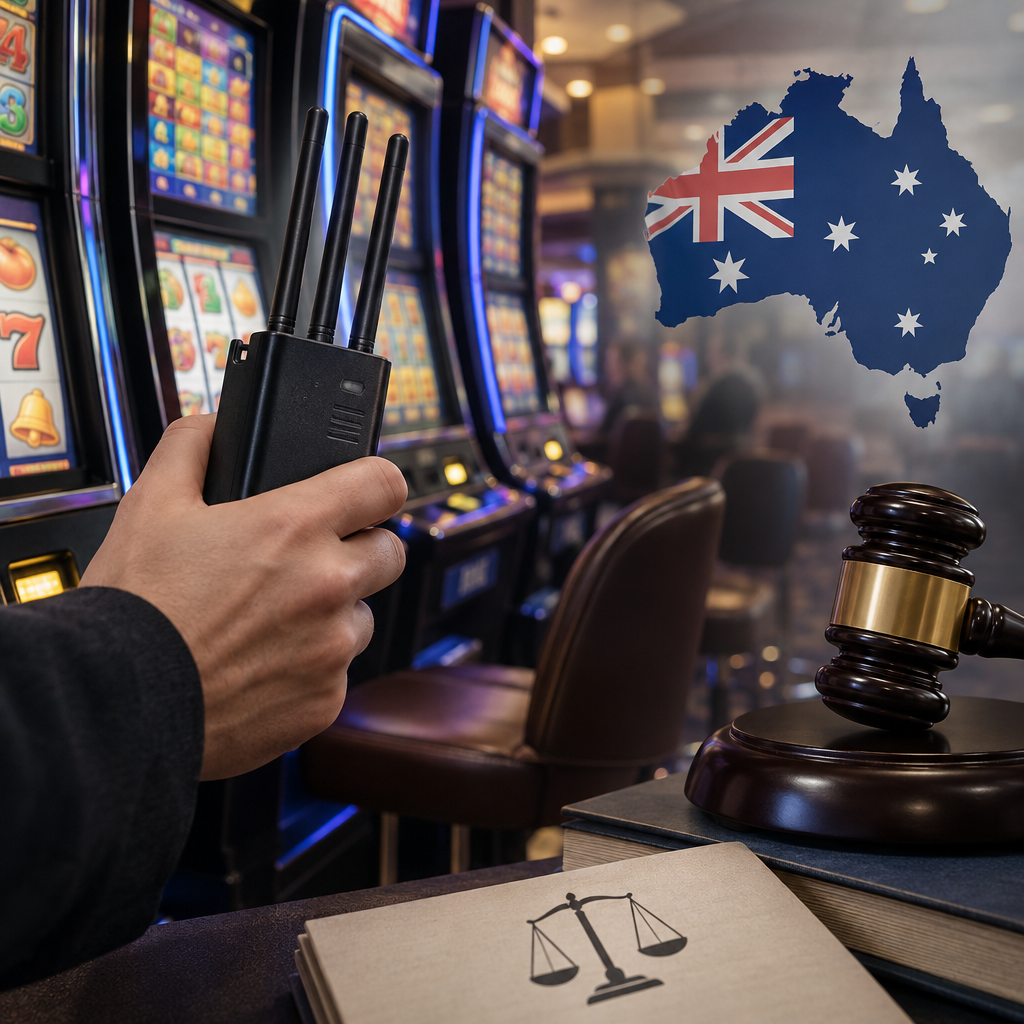
A pokies jammer is an informal term for a device or purported app claimed to interfere with a poker machine or influence its payouts. The research for this article found no credible independent evidence that a marketed product reliably changes results on a regulated Australian machine. That is not proof that every conceivable form of interference is impossible. Possessing, using or selling particular equipment can also carry legal risks, depending on the device, the conduct and where it occurs. A seller’s advertisement establishes what is being claimed; it does not establish that the claim is true.
What is a pokies jammer?
The term is used in marketing and search results rather than as a recognised category of approved gaming equipment. A poker machine jammer might be described as a physical product, an app or an accessory said to affect a machine. Those descriptions do not establish how a product works or whether it can do what its seller claims.
It is also important not to confuse every product advertised for use around gaming machines with a communications jammer. The latter is a type of radio equipment addressed by Australian communications rules. A product’s characteristics and the relevant legal definitions matter more than the name in an advertisement.
- Physical products: Advertisements may claim that an electronic device can influence a gaming machine. The advertisement alone is not an independent performance test.
- Purported apps or accessories: Online coverage discusses phone-based claims, but the research did not verify an Australian app listing or an independent successful test.
- Communications jammers: ACMA identifies prohibited categories including mobile-phone, GPS, Wi-Fi and drone jammers, subject to limited exemptions. Not every product called a jammer automatically falls into those categories.
What would count as evidence that a product works?
A convincing assessment would identify the product and version, the machine and game, and the person or organisation conducting the test. It would explain the controls used, how the result was measured and whether the claimed effect could be repeated in a lawful setting.
By contrast, a seller’s video or testimonial leaves important questions unanswered. A light turning on, for example, does not demonstrate that a game outcome changed. Even footage of a payout would not, by itself, establish that a product caused it rather than the game producing an ordinary result.
The physical-product advertisement reviewed for this article demonstrates that a control claim is being made. It did not provide an independent Australian test establishing reliable changes to machine results. No relevant Australian regulator product test was located in the research.
Do pokies jammers work?
The research found no credible independent evidence that a marketed device or purported app reliably changes the result of a regulated Australian poker machine. This is a finding about the available evidence, not a laboratory test of every device or a claim that electronic interference is physically impossible.
Victoria’s gambling regulator explains that ordinary poker-machine spins are random and independent of previous spins. If several spins lose, the next ordinary spin is not due to win because of those losses. A near miss likewise does not make the next spin more likely to produce a win.
The Australian and New Zealand Gaming Machine National Standard sets design and testing requirements for gaming machines. Its existence does not mean every jurisdiction applies every provision identically, and it does not establish that all interference is impossible.
A claimed disturbance and a predictable winning result are different things. Even if someone claimed to have caused an electronic effect, a separate, controlled demonstration would be needed to establish that the game result changed in the way advertised. Neither a normal payout nor a disruption alone proves reliable control over the outcome.
Are pokies jammers legal in Australia?
There is no single answer based solely on the product’s name. Possessing equipment, using it, supplying it and advertising it are different legal questions. The relevant rules can depend on the device, the person’s intended conduct, the venue and the state or territory.
Two areas of law are particularly relevant: Commonwealth rules on specified communications jammers and state or territory rules concerning gaming machines. This article provides general information, not legal advice. For a particular situation, check the current law and consult the relevant regulator or an independent lawyer.
Commonwealth rules on radio jammers
The Australian Communications and Media Authority, or ACMA, says possessing, operating, supplying or offering to supply specified categories of communications jammers is prohibited. The categories it identifies include mobile-phone, GPS, Wi-Fi and drone jammers. Limited exemptions exist for specified authorised purposes.
These rules apply when equipment falls within the relevant legal definitions. Calling something a pokies device does not take it outside those rules, but calling it a jammer does not automatically prove that it is a prohibited communications jammer either.
ACMA warns that communications jammers can interfere with essential services, including emergency communications. That risk is separate from whether a product can affect a poker-machine result. If you are unsure about particular equipment, seek advice rather than relying on the seller’s description.
NSW rules on possession and interference
Section 80 of the NSW Gaming Machines Act 2001 provides a specific example of gaming-related legal risk. The compilation reviewed for this article addresses specified cheating and interference, including possession of a device made, adapted or intended by the person to interfere with the normal operation of an approved gaming machine in a hotel or on club premises.
The possession provision in that compilation does not state that a payout must be obtained. Possessing an intended interference device and actually using one are therefore distinct questions. The provision also includes exceptions for certain authorised work carried out in good faith.
The accessible compilation was dated 25 August 2025, so readers should check the current consolidated Act before relying on this summary. Its hotel-and-club wording should not automatically be treated as the rule for casinos or for other Australian jurisdictions.
Other jurisdictions and misleading sales claims
The research did not establish a section-by-section comparison of gaming offences across the other states and territories. Do not assume that the NSW wording or any particular penalty applies elsewhere. The local gambling regulator or a lawyer can help identify the rules relevant to a specific place and situation.
The gaming landscape also differs by location. Western Australia’s policy distinguishes prohibited poker machines from authorised electronic gaming machines that are not poker machines at the casino. That policy distinction does not, by itself, establish an offence concerning a jammer.
A seller’s claims raise a separate consumer-law question. The ACCC says businesses must not make false or misleading claims and should have reasonable grounds for their claims. A lack of independent proof is a reason for caution, but it is not itself a legal finding that a particular seller has broken the law.
How to assess a suspicious offer
Before paying, installing software or sharing identity information, independently check both the seller and the claimed performance. A professional-looking website, a business registration or a convincing video does not prove that a product works.
Read the purchase and refund terms as well as the sales claim. Consider whether the seller identifies a genuinely independent test and whether that test concerns the same product and the type of machine the seller discusses. Avoid testing equipment in a venue.
If you have already paid or shared financial information and suspect a scam, contact your bank or card provider immediately and ask it to stop relevant transactions. Keep the advertisement, messages, receipts and transaction details. These records may help with a report, although recovering money is not guaranteed.
- Check the seller’s identity through independent sources, not just details on its own page.
- Look for an identifiable independent tester, a described method and repeatable measured results.
- Read the terms, including how a refund is requested and any conditions attached.
- Be cautious about requests for payment, identity documents or software installation before claims are verified.
- Keep copies of relevant communications and payment records if you have concerns.
Where to report a concern
The right reporting channel depends on what happened. A suspicious payment request and suspected malicious software, for example, may warrant separate reports. Reporting an offer does not automatically establish that the seller has done anything unlawful, and one agency’s report may not replace another.
If you suspect interference at a venue, tell staff or contact the relevant state or territory gambling regulator. Do not confront another patron or handle the item yourself.
- Suspected scam: Report it to Scamwatch.
- Possible misleading product claim: Report it to the ACCC. The ACCC does not resolve individual consumer disputes.
- Suspected prohibited radio equipment: Use ACMA’s illegal-equipment reporting channel.
- Suspected cybercrime: Consult the Australian Cyber Security Centre’s guidance and use ReportCyber where appropriate.
- Money or financial details shared: Contact your bank or card provider immediately as well as considering the relevant reports.
Safer choices and support for pokies players
If gambling is causing concern, pursuing a device is not a substitute for addressing the problem. People who choose to gamble can consider setting a spending limit, taking breaks and not chasing losses. These are harm-reduction measures, not guarantees against financial loss or loss of control. Stopping play is also an option.
The Gambling Helpline is available on 1800 858 858. It is free, confidential and available 24 hours a day across Australia for people affected by gambling, including family and friends. Gambling Help Online also offers support online.
Self-exclusion arrangements for physical venues differ by state, venue and scheme. In NSW, for example, GambleAware describes venue-based and some multi-venue options. A counsellor or venue can explain what is available locally; joining one scheme should not be assumed to exclude you from every venue in Australia.
BetStop is a separate option for people concerned about wagering: it covers Australian-licensed online and telephone wagering providers, not in-person casinos or pokies venues. Offshore online slots are not a recommended substitute. ACMA identifies online slots offered to people in Australia among illegal online services, a rule directed at provision of the service.
FAQ
Is a pokies jammer app real?
Online coverage discusses purported apps and phone accessories, but the research did not verify a particular Australian app listing or find a credible independent test showing that an app changes a regulated Australian machine’s result. That does not mean no app has ever been advertised. Be cautious about installing software or sharing information in response to an unsupported claim.
Can a jammer change a poker machine’s result?
No credible independent evidence was found that a marketed device reliably changes results on a regulated Australian poker machine. Ordinary spins are random and independent, but that fact alone does not prove that all electronic interference is impossible. A reliable result-changing claim would require an appropriate independent, controlled and repeatable test.
Can I get into trouble for using or possessing one?
Potentially. In NSW, the dated legislation reviewed includes a provision concerning certain devices intended to interfere with approved hotel or club gaming machines. Separate Commonwealth restrictions apply to specified communications jammers. Possession and use are distinct questions, and the current law, equipment and location matter. Consult the relevant regulator or a lawyer.
Where can I report a suspicious pokies jammer seller?
You can report a suspected scam to Scamwatch, a possible misleading claim to the ACCC, suspected prohibited radio equipment to ACMA or suspected cybercrime through ReportCyber. These services have different roles, and a report is not a finding of wrongdoing. If you have paid or shared financial details, contact your bank or card provider immediately.
Does BetStop exclude me from pokies venues?
No. BetStop covers Australian-licensed online and telephone wagering providers, not in-person casinos or pokies venues. Ask a local venue, gambling support service or counsellor about the self-exclusion arrangements available where you live. The coverage of a venue-based or multi-venue scheme depends on the scheme; it should not be assumed to apply nationwide.
Is every product called a jammer covered by the radio ban?
No. ACMA’s restrictions cover specified communications-jammer equipment, including identified mobile-phone and GPS jammer categories, subject to limited exemptions. Whether a particular product is covered depends on its characteristics and the applicable definitions, not just its advertised name. A product outside those radio-equipment rules is not necessarily lawful under other laws.
The research found no credible independent evidence that a marketed product reliably changes results on regulated Australian poker machines. Legal risk depends on the equipment, conduct and location, while a seller’s label does not settle either the technical or legal question. Check claims independently and do not test equipment in a venue. If an offer looks suspicious, use the relevant reporting channel; if gambling is causing harm, the Gambling Helpline is available on 1800 858 858.