Does Everywhere Accept Mastercard in Australia?
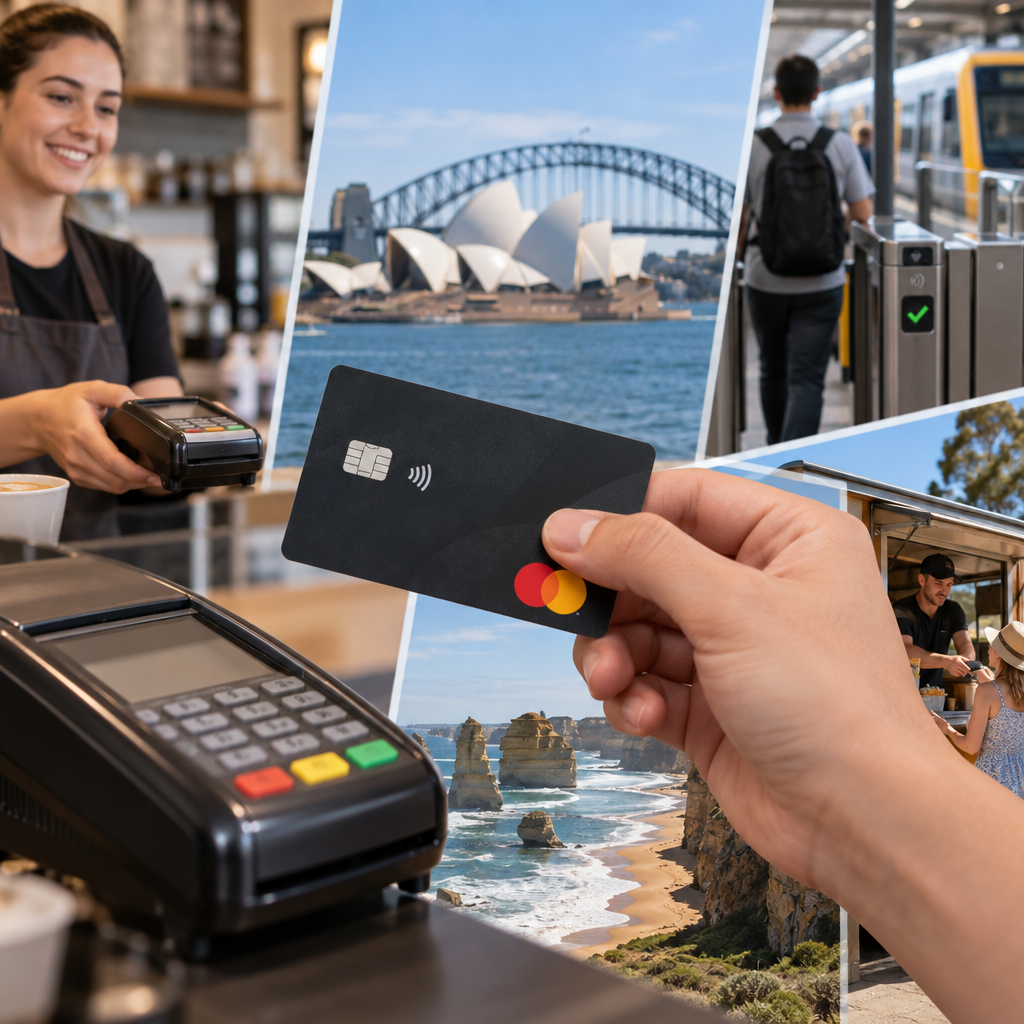
Does everywhere accept Mastercard? No. Mastercard is widely used in Australia, but not every business, website or payment terminal accepts it. Payment options depend on the merchant, the type of card and how you pay. It is also important to distinguish acceptance from approval: a business may accept Mastercard even though an individual transaction is declined. Before an important purchase, check the merchant’s payment options and have a practical backup.
Where is Mastercard accepted in Australia?
You can use Mastercard at many Australian businesses, online retailers and services, but there is no substitute for checking the particular merchant. A sign at a shop does not necessarily tell you what its website accepts, and a Mastercard logo does not guarantee that every card or transaction will be approved.
For an important purchase or booking, check before you commit. Look at the payment information for the exact location or checkout you intend to use, especially if you have a prepaid card or a card issued overseas.
- At a shop or restaurant, look for the Mastercard mark at the entrance, counter or terminal. If the information is unclear, ask staff before ordering or paying.
- Online, check the retailer’s payment page and checkout for accepted cards and any conditions attached to your card type or country of issue.
- For transport, check the local operator’s guidance on eligible cards, routes and fares rather than assuming the same rules apply across Australia.
Using Mastercard in shops, on transport and online
In person, a displayed Mastercard mark is a useful indication that the business accepts the network. For example, Fremantle Football Club’s Cockburn team store lists Mastercard among its payment methods. That is an example of one store’s policy, not evidence that every sports store or every location accepts the same cards.
On public transport in New South Wales, Transport for NSW lists eligible contactless Mastercard debit and credit cards among the ways visitors can pay, alongside Opal cards. Check the operator and service before travelling: contactless arrangements and fares can differ, and some travellers need an Opal card to access a concession.
For an online Mastercard payment, look beyond the logo if the purchase is important. Read any conditions about card type, billing details or where the card was issued. These are matters to check, not a suggestion that such restrictions are widespread.
A digital wallet or checkout service may store your card without making it usable at every retailer. Mastercard says Click to Pay can hold cards from several brands, but the retailer determines which cards it accepts. The payment still has to pass any relevant verification and approval checks.
Using Mastercard overseas
When travelling or buying from an overseas website, check the individual merchant’s payment options and your card issuer’s terms. Your issuer can explain whether international transactions are enabled and whether it charges foreign-transaction or other relevant fees.
If a terminal or website offers to convert a purchase into Australian dollars, examine the displayed exchange rate and any conversion charges before choosing. Compare the terms with what you know about your issuer’s charges; neither choice should be assumed to be cheapest in every case.
Mastercard provides an ATM locator and a currency converter, which can help with travel planning. An ATM listing is not a directory of nearby shops that accept Mastercard. ATM operators and card issuers may also charge fees, so check those terms before withdrawing cash.
Why might a business not accept Mastercard?
Australian businesses generally choose which payment methods to offer. A business may not accept card payments, may have chosen different payment methods or may have equipment or a payment arrangement that does not support the method you want to use.
The arrangements can involve an acquirer: a financial institution that helps a retailer accept card payments. The merchant’s setup, the card product and the way the payment is initiated can all matter. Without asking the business, you cannot tell which factor explains its policy.
If there are no clear payment signs at a counter, ask what the business accepts before placing an order. Do not assume that Mastercard’s processing cost is the reason for a refusal; the actual reason may be different.
Mastercard acceptance versus a declined payment
Acceptance means the merchant is set up to take the relevant payment. Approval is the separate decision about an individual transaction. A Mastercard declined at a merchant displaying the logo does not, on its own, establish that the business has stopped accepting the network.
A payment can fail for several reasons. Examples in payment-gateway documentation include insufficient funds, an expired card, an incorrect security code, failed authentication, a risk block or an unsupported transaction type. A terminal or checkout problem is another possibility.
Start by confirming that the merchant supports your card type and the way you are trying to pay. Then investigate the individual transaction. The merchant or your card issuer may be able to provide more information, but the decline message itself may not identify the cause.
Debit, credit, prepaid and contactless: what to check
A Mastercard debit card, credit card and prepaid card are not necessarily interchangeable for every purchase. Mastercard says Debit Mastercard can be used where Debit Mastercard is accepted. For a significant payment, confirm that the merchant supports the relevant debit product rather than treating a network logo as an unconditional promise.
A Mastercard prepaid card may be subject to product or merchant restrictions. Universal Gift Card Australia, for example, identifies a merchant not accepting Mastercard prepaid cards as one possible reason its card might fail. That product-specific example does not establish how often prepaid cards are refused elsewhere.
Check a prepaid card’s balance before paying. If the purchase costs more than the available balance, ask whether the retailer allows a split payment using another method for the remainder. Mastercard notes that not every retailer supports splitting a purchase this way.
Tapping a physical card, inserting it and paying with a phone are different ways to initiate a payment. A contactless symbol alone does not mean a reader accepts every card network, product or wallet. If in doubt, ask the merchant which combinations it supports.
How Mastercard and eftpos routing works
Some Australian debit cards are dual-network cards: they support eftpos as well as an international network such as Mastercard. For an eligible debit transaction, the network route determines how the payment is processed, but it does not change the underlying deposit account from which the money is drawn.
A merchant may use least-cost routing for eligible transactions, selecting the network that costs it less. Otherwise, a default route may be used. This is a debit-card feature; least-cost routing does not apply to credit cards.
For an in-person purchase, inserting an eligible physical card and selecting a network when the terminal offers a choice can give the customer a say in the route. It does not guarantee that the transaction will succeed. Not every Mastercard debit card is dual-network, and online and mobile-wallet routing arrangements are not identical for every payment.
If the route matters to you, check your card issuer’s information and the options shown at the terminal. Routing availability and payment arrangements can change.
What to check after your Mastercard is declined
Work through the possible causes in order, starting with whether the merchant accepts the relevant card and payment method. A different payment method may be quicker if you need to complete the purchase immediately.
Before retrying, check whether an earlier attempt is pending. This is particularly useful online, where it may not be obvious whether the checkout processed the request. Avoid repeatedly submitting the payment without checking its status.
- Confirm acceptance: Ask whether the merchant takes your type of Mastercard and supports the method you are using, such as contactless or prepaid.
- Check the card and funds: Review the card number, expiry date and security code where relevant, along with the available account balance or credit.
- Check with the issuer: Look for an app notification or contact the issuer about card status, limits, online or international settings, or an authentication prompt.
- Try an available physical-card option: If tapping fails, ask whether you can insert the card. A different route may be used, but success is not guaranteed.
- Ask the merchant: Check whether there is a terminal or checkout issue. If the problem remains unresolved, use another method the business accepts.
What to do if Mastercard is not accepted
If the merchant confirms it does not accept your card, ask which alternatives it offers. These might include another card network, cash, bank transfer or another payment method. None should be assumed to work at every business.
Check the total before choosing an alternative. An overseas purchase may involve conversion costs, while an unrelated service or booking fee may affect the final price. Australian Mastercard surcharge rules are a separate issue, explained below.
For travel, accommodation or an appointment where a failed payment would cause difficulty, check the accepted methods in advance and carry a suitable backup. Cash can be useful, but it is not universally accepted; some businesses have cash-acceptance obligations under applicable industry codes.
FAQ
Do all Australian businesses accept Mastercard?
No. Businesses generally choose their accepted payment methods, and some may not offer the card or payment channel you want to use. Check the signs at the premises, the online checkout or the merchant directly. A displayed logo is useful, but it does not guarantee approval of an individual transaction.
Is Mastercard accepted everywhere Visa is accepted?
Do not assume the two networks have identical acceptance. A merchant can choose which payment methods it offers, and its online and in-person options may differ. Check the specific business, payment channel and card type rather than relying on the presence of a Visa logo.
Can I use a Mastercard debit card wherever Mastercard is accepted?
A Debit Mastercard can be used where the relevant Debit Mastercard payment is accepted, subject to the merchant’s arrangements and approval of the transaction. Some Australian debit cards also support eftpos, which can provide a different network route for eligible transactions. Not every Mastercard debit card is dual-network.
Are Mastercard prepaid cards accepted everywhere?
No. A merchant or prepaid product may have restrictions, even when Mastercard is otherwise accepted. Check the card’s terms and balance before paying. If your balance is below the purchase price, ask whether the retailer allows you to split the payment; not every retailer does.
Can an Australian business charge a Mastercard surcharge?
Generally no. From 1 October 2026, Mastercard’s no-surcharge rules generally apply to its credit, debit and prepaid cards, including internationally issued cards. The previous excessive-surcharge framework ended on that date; network exemptions are for the network to determine. An unrelated, properly disclosed fee, such as a weekend hospitality surcharge, is a separate matter. If you are concerned about a charge, raise it with the business; the ACCC also points Mastercard customers to the network or payment service provider.
Can visitors use an overseas-issued Mastercard in Australia?
Visitors can check whether the merchant accepts their card type and whether it states any country-of-issue conditions. They should also ask their issuer about international-use settings and fees. For NSW transport, consult Transport for NSW’s eligible-card and fare guidance; arrangements elsewhere in Australia may differ.
Mastercard is widely used in Australia, but acceptance is not universal and an accepted card can still be declined. Check the specific merchant, card type and payment method before an important purchase. If a supported payment fails, check the transaction details and contact the issuer or merchant; if Mastercard is not accepted, choose an alternative the business offers.