Do Most Places Take Mastercard in Australia?
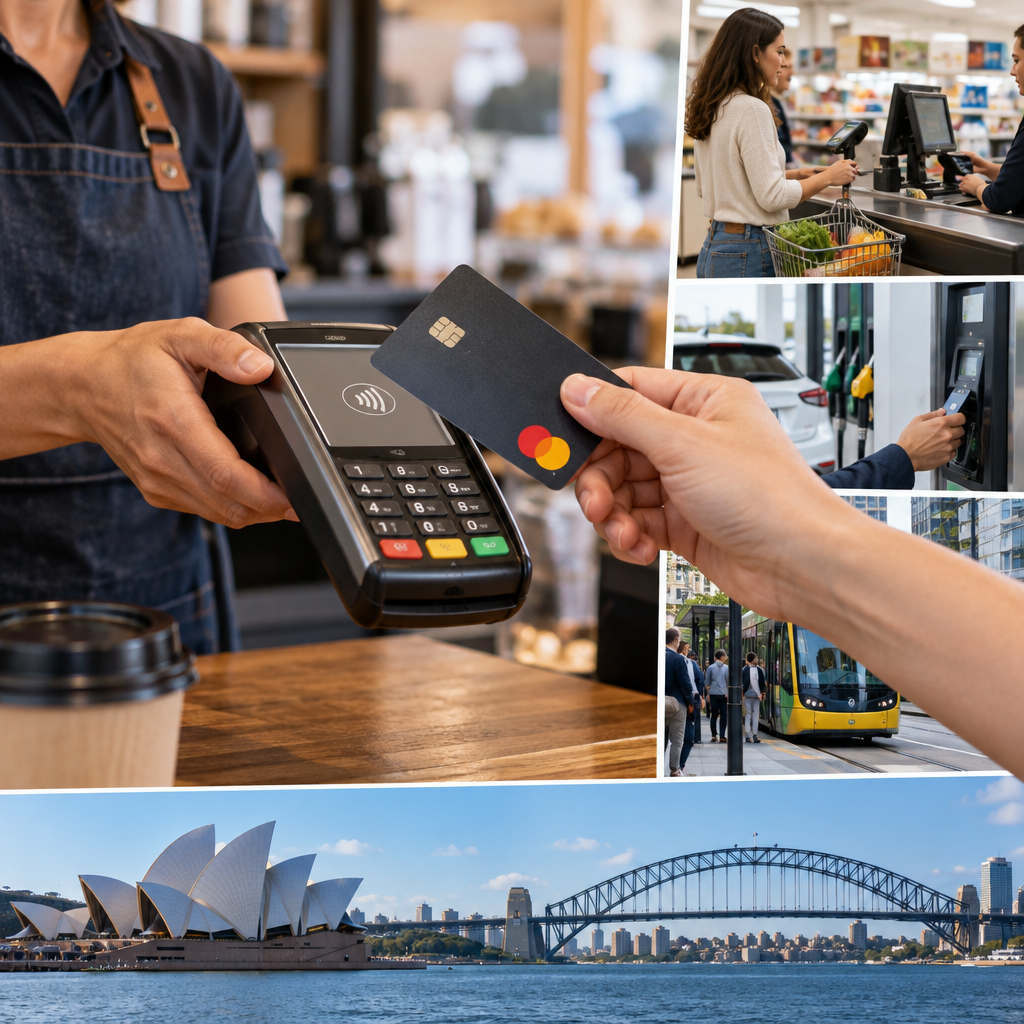
Do most places take Mastercard in Australia? Generally, yes: Mastercard is widely accepted at many shops, restaurants and online businesses. Acceptance is not universal, though, and a Mastercard logo does not guarantee that every debit, credit or prepaid card will work for every transaction. Before an important purchase or booking, check the merchant’s requirements, your issuer’s settings and any potential fees. A suitable backup payment method can also help if your first choice is declined or unavailable.
Where can you use Mastercard in Australia?
Mastercard acceptance in Australia is broad. Queensland’s visitor information identifies Mastercard as one of the major cards accepted in the country. You may be able to use one at supermarkets, restaurants, retail shops and online stores, although individual businesses decide which payment methods they offer.
There is useful evidence of general card acceptance, but it should not be mistaken for a Mastercard-specific figure. In a 2022 Reserve Bank of Australia survey of approximately 350 retail merchants, 97% accepted card payments. That was a survey of retailers at a particular point in time, not a census of Australian businesses or a count of Mastercard acceptance.
A payment terminal or contactless symbol is not enough to confirm that your particular card will work. Check for the Mastercard mark, and ask the business if you need to know whether it accepts a specific debit, credit or prepaid product.
This is especially useful before visiting a market stall or travelling to a remote location, or whenever you cannot easily change your plans. It does not mean that businesses in those settings usually refuse Mastercard; it means that checking ahead can prevent an inconvenient surprise.
Using Mastercard on public transport
Transport payment arrangements differ between operators and services, so do not assume that a card accepted in one city will work on every Australian bus, train or ferry.
Transport for NSW accepts Mastercard on its contactless service. Passengers should use the same card or device to tap on and off. For example, if you tap on with a phone, use that same phone to tap off rather than switching to the physical card.
Before travelling, check the operator’s current payment options and the services covered. If direct card payment is not available for your journey, find out whether you need a local transport card or another ticket.
Does it matter which Mastercard you have?
Yes. Mastercard is the payment network, while the issuer, such as a bank or another financial institution, administers the card account and its terms. The merchant must accept the card and payment method, and the issuer must also authorise the transaction.
The main card types use different sources of funds and may be subject to different restrictions:
- Debit: A Mastercard debit card in Australia generally draws on a linked deposit account. Check that sufficient funds are available and that the merchant accepts the card for the intended transaction.
- Credit: A Mastercard credit card uses credit provided under the issuer’s terms. Available credit, account settings and the merchant’s requirements can affect whether a payment succeeds.
- Prepaid: A prepaid Mastercard uses an available prepaid balance. Its issuer may restrict certain uses, and a merchant may decline prepaid cards for a booking or deposit even if it accepts other Mastercard products.
Debit routing, contactless payments and digital wallets
A business that accepts a physical Mastercard does not necessarily support every way of paying with it. A contactless or digital-wallet transaction depends on a compatible card, issuer, wallet and merchant setup. If you normally pay by phone, carrying the physical card can be useful where the merchant requires it or the wallet does not work.
Credit and debit acceptance are not automatically identical either. The RBA’s framework does not require a merchant to accept a network’s debit cards simply because it accepts that network’s credit cards, or vice versa.
Some Australian debit cards can use both Mastercard and eftpos. For eligible contactless transactions on a dual-network debit card, a merchant may route the payment through an available lower-cost network. The RBA says a cardholder can instead insert the card and select the relevant network option. Routing does not change the deposit account from which the money is drawn.
Network choice should not be confused with a guaranteed saving on a card surcharge. The general surcharge rules changed in October 2026, and the applicable rules and any exceptions depend on the transaction.
Why car hire can have stricter card requirements
Car hire shows why a network logo alone is not enough. A rental provider may have separate requirements for the card presented at pick-up, a pre-authorisation hold and the final payment.
Avis Australia says it accepts Mastercard credit and debit cards for rental and requires a physical card at pick-up. It does not accept prepaid, reloadable stored-value or travel-money cards for that purpose. Some locations may accept certain prepaid cards for the final payment.
A pre-authorisation hold can temporarily reduce the funds or credit available to you, even though it is not the same as the final rental charge. Check the amount and release conditions with the provider and your issuer.
Avis is one example, not a rule for every rental company. Before booking, check the policy for your location and vehicle category, including whose name must be on the card, whether a debit card is eligible and whether a physical card is required.
How to check where you can use Mastercard
If you are asking where can I use Mastercard for a particular purchase, the most reliable answer comes from the business handling that transaction. Use this checklist before ordering, booking or setting out:
- Look for the Mastercard mark at the entrance, terminal or online checkout. Treat it as a starting point rather than a guarantee for every card type.
- Read the merchant’s payment terms. Check for restrictions on debit, credit, prepaid or overseas-issued cards.
- Ask about deposits and pre-authorisations. For accommodation or car hire, confirm whether the provider requires an eligible physical card and whether your intended card can be used at check-in or pick-up.
- Check the specific transport operator and service. Payment arrangements are not necessarily the same across Australia.
- Contact the business directly if anything remains unclear. Ask before you commit to a purchase or reservation.
- For an overseas card, check international settings, potential issuer fees and wallet compatibility. Ask your issuer whether it requires a travel notification or another security step.
Mastercard surcharge in Australia: what changed in October 2026?
From 1 October 2026, the RBA lifted its prohibition on card networks imposing no-surcharge rules. Mastercard, Visa and eftpos introduced their own rules from that date. As a general position, a business cannot add a fee simply because a customer pays by Mastercard, although applicable exceptions may exist.
The RBA says the network rules generally cover debit, credit and prepaid cards, including cards issued overseas. Exceptions can arise under law or regulation, and taxi fare surcharging remains subject to the relevant state or territory framework. The former general approach, under which a card surcharge could be limited by the merchant’s cost of acceptance, should not be assumed to describe the current rules.
Not every extra amount on a bill is necessarily a card surcharge. A booking, weekend, public holiday or service fee may be a separate charge. Equally, calling something a service fee does not settle the question if it is actually charged for paying by card.
If a charge looks questionable, ask the business what it covers and request a refund if it is an improper card surcharge. If the issue is unresolved, you can raise it with the card network and consider contacting your bank or the payment provider. The ACCC handles misleading-pricing concerns under consumer law.
Rules and individual merchant policies can change, so check the latest RBA and ACCC guidance when assessing a particular charge.
Overseas card fees and currency conversion
The rules on merchant card surcharges do not necessarily remove charges from your own issuer. An overseas bank or card provider may charge a foreign transaction fee or a conversion-related fee under your card’s terms. ATM withdrawal charges may also apply. Check the issuer’s current terms rather than assuming a standard amount.
When paying with an overseas card, you may be offered a choice between Australian dollars and your home currency. If the merchant or ATM operator performs the conversion, Mastercard says its own conversion rate does not apply.
Compare the displayed rate and any markup with the terms of your card before choosing. Paying in Australian dollars avoids conversion by that merchant or ATM operator, but it does not guarantee the lowest total cost or eliminate a fee charged by your issuer.
For example, a visitor paying an accommodation bill might choose AUD at the terminal and still see a foreign transaction fee on their card statement. That issuer fee is a different matter from an extra charge added by the accommodation provider for paying by card.
Choosing a useful backup payment method
A second card and some Australian cash can be helpful, depending on your itinerary. A second card may give you another option if the first issuer declines a payment, while cash may be useful where a business accepts it. Neither will work everywhere.
The RBA’s 2025 survey evidence indicates that around three-quarters of surveyed card-accepting businesses with an in-person presence also accepted cash. That figure does not describe all Australian businesses, and it leaves a reason to check whether a particular merchant is cashless.
Choose your backup around the payments you actually expect to make. For a rental car, confirm that the backup card satisfies the provider’s pick-up rules. For transport, check whether cash, a local ticket or a second card is accepted on the service you plan to use.
Keep the issuer’s contact details available separately from your card. If a payment is declined and the merchant accepts the card type, the issuer is best placed to explain an account-specific problem.
FAQ
Is Mastercard or Visa more widely accepted in Australia?
Both are major card networks used in Australia, but the available research does not provide sufficiently current, comparable merchant-coverage figures to rank them. Mastercard vs Visa acceptance is best checked with the particular business, including any restrictions on debit, credit or prepaid products. A card on another network can be a useful backup, but it is not a guarantee that a payment will succeed.
Can I use an overseas Mastercard in Australia?
Often, yes, if the merchant accepts the relevant card product and your issuer authorises the transaction. Before travelling, check international purchase settings, foreign transaction fees and any prepaid-card restrictions. Overseas-issued cards are generally covered by the current network no-surcharge rules, subject to applicable exceptions, but your issuer may still charge fees under its own terms.
Why might a Mastercard payment be declined?
Possible causes include the merchant not accepting that card type or payment method, insufficient available funds or credit, incorrect details, a verification issue, issuer settings, or a terminal or connection problem. Ask the merchant whether it accepts your card and method. If a Mastercard payment is declined and the cause remains unclear, contact the issuer for an explanation specific to the transaction.
Do all Australian businesses accept Mastercard?
No. Mastercard is widely accepted, but businesses can generally choose their payment methods. Even where a business accepts the network, it may have different requirements for credit, debit or prepaid cards. Check directly before a booking, deposit or other payment where you cannot easily use an alternative.
Can I use a prepaid Mastercard for car hire?
Not necessarily. Avis Australia, for example, does not accept prepaid cards for its pick-up requirement, although some locations may accept certain prepaid cards for final payment. Other providers can have different policies. Before booking, confirm the requirements for the location and vehicle category, including the physical card and pre-authorisation needed at pick-up.
Can a merchant charge me extra for paying by Mastercard?
Generally, a business cannot add a Mastercard surcharge simply because you pay with the card, although exceptions can apply. The network rules took effect on 1 October 2026 and generally cover debit, credit and prepaid cards, including overseas-issued cards. Other charges, such as issuer fees or payment-independent service fees, are separate matters. Ask the business what a questionable charge covers.
Mastercard is widely accepted in Australia, but no single card or payment method is certain to work everywhere. For an important payment, check that the merchant accepts your card type and payment method, then review your issuer’s settings and fees. Pay particular attention to deposits and physical-card requirements. A second card or some cash may provide a useful alternative, provided it is accepted where you plan to use it.