Can You Pay Your Phone Bill Over the Phone in Australia?
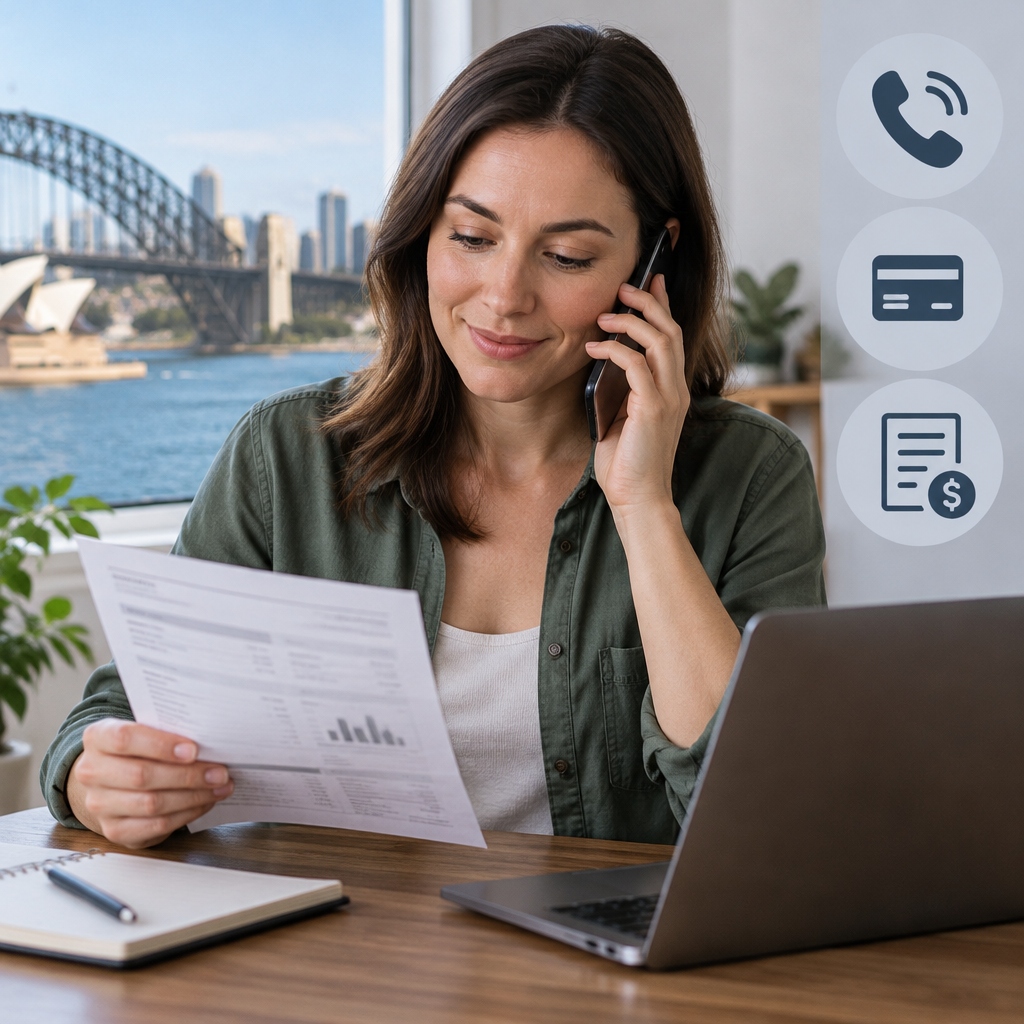
Can you pay your phone bill over the phone in Australia? Often, yes. Some providers accept debit or credit card payments when you call their payment number, although the option may depend on your account and plan. This means making a voice call, not using a website or app on your mobile. Before calling, check your bill or the provider’s official instructions for the correct number, accepted cards and possible fees. Keep a record of the payment, and check the provider’s separate instructions if you need to recharge a prepaid service rather than pay an issued bill.
How to pay your phone bill by calling
Start with the payment section of your bill or an official support page you have found independently. Check that the number is intended for your provider and account type: a general customer-service number is not necessarily a dedicated payment line.
Have your bill and an accepted payment card ready. Your account number identifies your customer account, while a payment reference helps a biller allocate a payment and may be different for different payment methods. Use the reference requested for the particular service.
The provider may need to verify your identity, especially if you ask an agent to discuss your account. Requirements vary, so ask what information is needed rather than assuming every provider follows the same process.
During the call, follow the instructions and check the account, amount and any disclosed charge before confirming. Ask whether it is a one-off payment: making one does not necessarily change an existing automatic-payment arrangement.
Keep the date, amount and any receipt or confirmation number. If you do not receive confirmation, ask how to verify the transaction before trying again. This can help you avoid accidentally paying twice.
- Check that the phone-payment option applies to your account.
- Find the number on your bill or through the provider’s official support information.
- Have your account number or requested payment reference and an accepted card ready.
- Confirm the amount and any fee, then keep the payment record.
Australian providers with published payment numbers
The following are examples, not a complete list. Numbers, account eligibility and terms can change, so check your provider’s current instructions before calling.
Telstra publishes its telephone-payment instructions for Upfront-plan customers who receive a bill. The page does not establish that the same option applies to every Telstra account. Optus and Goodtel also list phone payments by card; check the instructions for your own plan.
- Telstra: 1300 369 666. Have your account number ready, follow the prompts and pay by debit or credit card, subject to the account scope above.
- Optus: 1300 309 309. Optus lists debit or credit card payment and says it may take up to two business days to appear in your account.
- Goodtel: 1300 850 463. Goodtel lists payment by credit or debit card. Check whether a card surcharge applies to your payment.
Cards, fees and payment processing
The examples above accept debit or credit cards for their published phone-payment options, but that does not mean every provider accepts every card or offers the same payment channel. Check your card brand and account eligibility before calling.
There can be several separate costs. A card surcharge relates to using a card. A non-direct-debit fee can apply to an eligible account that is not paid through an automatic arrangement. A call charge is a different matter again: do not assume a call to a 1300 number is free.
For example, Optus says relevant home phone and broadband accounts can incur a $2.20 non-direct-debit processing fee, while mobile-only accounts are not charged that particular fee. This does not establish that every Optus mobile card payment is free of other charges. Goodtel lists general card surcharges, but its published information does not clearly assign them to each payment channel.
If the cost is unclear, ask: “Is there a card surcharge, a non-direct-debit fee or a call charge for my account?” Check the total before authorising a payment.
A payment being recognised by the provider is not necessarily the same thing as it appearing in your account. Optus says a telephone card payment may take up to two business days to appear. That is an Optus example, not a processing deadline for every provider. If your due date is close, ask your provider how it treats the payment date and when the transaction should appear.
What to do if a payment does not appear
First, check any confirmation you received and your card transactions, if you can access them. A pending card entry does not by itself confirm that the provider has allocated the money to the correct account.
Allow for the processing period stated by your provider. If the payment is still missing, or you are concerned about an approaching due date, contact the provider using an independently verified number. Give it the date, amount, account or payment reference and any confirmation number.
Ask the provider to establish what happened before you make another payment. If a reference was entered incorrectly, explain the issue and ask how the payment can be traced or allocated.
Paying when your service is restricted or you have no internet
If your own phone service cannot make the call, consider using another working phone. Have your account information ready and ask the provider about its identity requirements. Do not assume a payment line will be reachable from every restricted service.
Paying an overdue bill does not guarantee immediate restoration. Ask why the service is restricted, whether the payment needs to be reported and whether any other action is required.
As one provider-specific example, Optus says a credit-card payment under its stated restoration process does not need to be reported and the service will automatically be restored within 15 minutes to four hours. That statement should not be assumed to apply to debit cards, other providers or every reason for restriction.
You may also be able to pay a phone bill without internet through your bank or in person. These are alternatives to calling the telco itself, and their availability depends on your bank, biller and account.
Australia Post’s published service notice says its Post Billpay telephone service is unavailable. Check the current notice before relying on it. Its participating in-person service is a separate option for eligible bills.
- Provider payment line: use another working phone if necessary and have the required account details and payment method ready.
- Telephone banking and BPAY: if your bank and biller support it, use the biller code and customer reference shown on your bill. NAB, for example, lists BPAY through phone banking.
- Post Billpay in person: take an eligible bill or payment slip to a participating Australia Post outlet. Check accepted payment methods and any fee, and keep the receipt.
Help if you cannot afford the bill
If paying the full amount would leave you unable to meet other essential costs, contact your telco as soon as possible and ask for financial hardship or payment assistance. Help can be relevant whether the difficulty is temporary or ongoing. Explain what you can realistically afford and which phone or internet services you need.
The Australian Communications and Media Authority says telcos must offer at least six assistance options overall. These must include a postponement, extension or deferral, and a payment plan tailored to the customer’s ability to pay. Other possible measures include a different product, spend controls, a free non-automatic payment method or a discount or waiver of some debt.
These are possible forms of assistance, not a promise that a particular debt will be waived or that every restriction will automatically stop. ACMA says a provider must assess a hardship application within five business days and communicate the outcome within two business days.
Ask for the terms of any arrangement in writing, including the amounts and dates you have agreed to. Avoid relying on a credit card or payday loan if doing so would make your debt harder to manage.
For independent help, the National Debt Helpline offers free financial counselling on 1800 007 007. If you cannot resolve a problem, complain to your provider first; you can then consider contacting the Telecommunications Industry Ombudsman.
- Contact the provider promptly and ask for payment assistance.
- Explain what you can afford and ask which options are available.
- Request the agreed arrangement in writing.
- Seek independent financial counselling if you need help assessing your options.
How to avoid phone-payment scams
Be cautious if an unexpected caller or message demands urgent payment and provides a callback number or link. Hang up or set the message aside, then find the provider’s contact details independently using your bill or its official website.
Do not give an unexpected caller your online-banking password, banking PIN or one-time security codes. This is different from providing card details during a legitimate payment process that you initiated after checking the provider’s number.
If you have shared financial details or sent money to someone you suspect is a scammer, contact your bank promptly. Contact your telco through an independently verified channel as well.
FAQ
Can someone else pay my phone bill over the phone?
It may be possible. Ask your provider what account information and authority the person needs. Telstra says an appointed Third Party Authority can pay bills and make billing enquiries within the terms of their appointment. That does not mean formal authority is always required for a one-off payment or that every provider has the same rules. A helper should not impersonate the account holder or use their passwords.
Can I pay my phone bill without internet?
Yes, if your provider offers a suitable payment line or you can use an eligible telephone banking service such as BPAY. You will need a working phone, the correct account or payment reference and an accepted payment method. An eligible bill may also be payable in person at a participating Australia Post outlet.
Can I pay a phone bill by debit or credit card over the phone?
Telstra, Optus and Goodtel list debit or credit cards for their published phone-payment options. Check whether the option applies to your account, whether your particular card is accepted and whether a surcharge or other fee applies. Do not assume every provider offers the same card-payment service.
Will my service be restored as soon as I pay?
Not necessarily. Restoration depends on the provider, the payment method and the reason for the restriction. Optus gives a 15-minute to four-hour automatic restoration window for its specified credit-card process. Ask your own provider whether you need to report the payment or take any other action.
What should I do if my payment does not appear?
Keep the confirmation and check your provider’s stated processing period. Optus says its telephone card payments can take up to two business days to appear, but other providers may differ. Contact your provider with the date, amount, reference and confirmation number, and establish what happened before paying again.
Is a prepaid recharge the same as paying a phone bill?
No. A prepaid recharge adds credit or renews a prepaid service, while paying a bill settles an amount already billed to an account. A provider’s bill-payment number should not automatically be treated as a recharge number. Check the official recharge instructions for your particular prepaid service.
Many Australian customers can pay a phone bill by calling their provider, but the right number, eligible accounts, accepted cards and fees vary. Check the official instructions for your account, confirm the amount and any charges, and keep the payment record. If the bill is unaffordable or your service is restricted, contact the provider to discuss assistance or the steps needed for restoration.